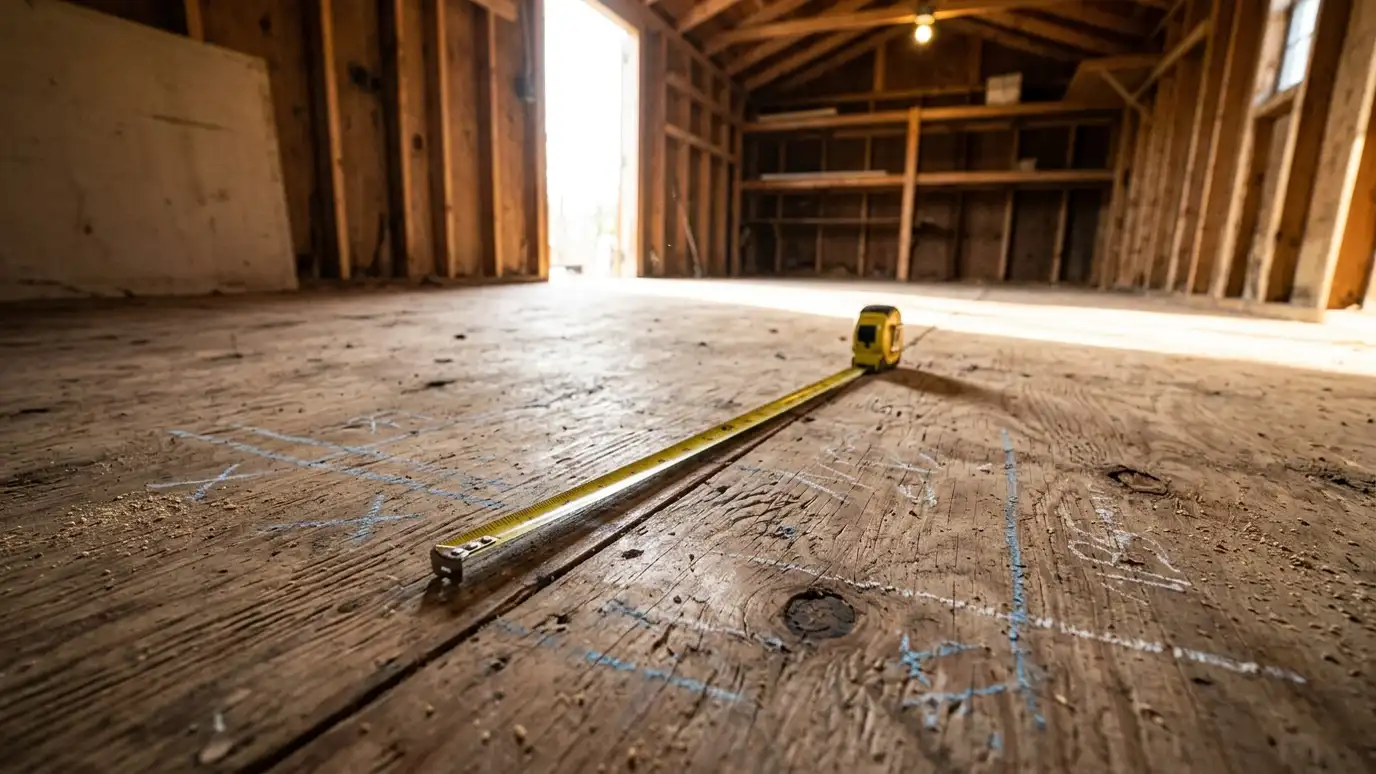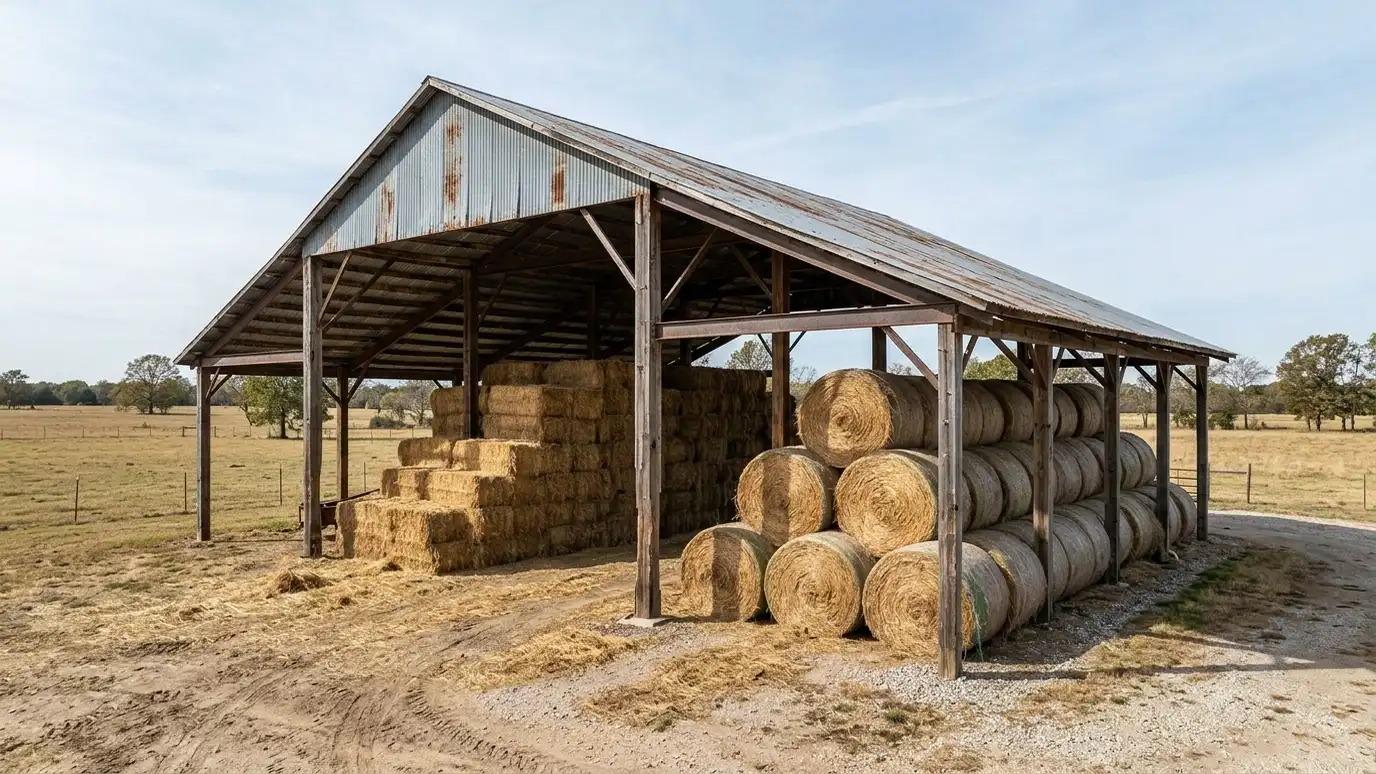
Hay and feed storage buildings with raised floors, airflow, tall clearance and tight walls that keep hay dry and feed away from moisture and rodents.
Hay and feed lose value fast when they get damp or moldy. A good storage building keeps bales dry, lets air move to reduce heat and protects feed from pests. Farm and horse owners in Nashville and nearby counties build them to keep their supply safe and to make loading and unloading easier.
We plan stacking height and bale layout, then size posts, roof and doors for the equipment you use to load. We raise floors or add a base that stays dry, plan open sides or vents for airflow and use tight walls and flashing in places where rodents or rain would enter. We also discuss fire safety, because stored hay can heat and burn. Storing hay safely takes more than a roof. Bales should not touch wet ground or walls that collect moisture, and stacking should leave gaps for air to move. We plan the floor, wall details and roof overhang to keep rain away, and we consider where the building sits relative to animals, vehicles and other structures. Good habits such as rotating old bales to the front and checking for heat make the building work even better.
A raised floor or well-drained base keeps bales from wicking moisture from the ground.
Open sides, vents and gaps let heat and moisture escape from stacked hay.
Tight walls, closed gaps and metal flashing help keep rodents out of feed.
Doors fit your loader or truck, and we plan spacing and wiring with fire safety in mind.
Drag the handle to compare.
 BeforeAfter
Floor kept dry.
Vents and open sides.
Tight details.
Stack and load.
Fits your loader.
Spacing and wiring.
Every topic has its own page with what to expect and how we approach it.
 ResourceMCAAn association of manufacturers and suppliers of metal roofing and walls that publishes technical information about metal panels…Learn more
 ResourceNRCAA national association of roofing professionals that publishes technical manuals, guidance for homeowners and a directory of member…Learn more
 ResourceNRCSA free online tool from the USDA that shows soil types and properties for any area, including drainage…Learn more
Pick a shed, workshop, garage, carport, barn, slab, roof or upgrade, set the size and add allowances like permits, site prep and delivery to see a ballpark planning range. Placeholder values only.
You tell us what you want to build or fix, how you will use it and where it will sit, and we ask about the lot and your timing.
We walk the lot, check slope, drainage, access, utilities and setbacks, and take photos and measurements.
You get a plain written estimate with the size, materials, foundation, finishes and schedule before anything is ordered.
We mark the layout, clear and level the area, set the foundation and arrange permits, delivery and utilities.
The frame, roof, siding, doors and windows go up, then the interior, power and trim are finished to the plan.
We walk the finished building with you, leave a care guide and photos and make it easy to schedule a checkup.
Many mix both: open sides for airflow and closed areas for feed. We plan for your hay and climate.
Tight construction, metal at the base and good housekeeping help, and we discuss traps and storage habits.
Yes, with separate closed rooms or bins where possible.
It depends on bale size and the building. We plan clearances with safety in mind.
It can be if it is stored damp. We discuss moisture, spacing and wiring.
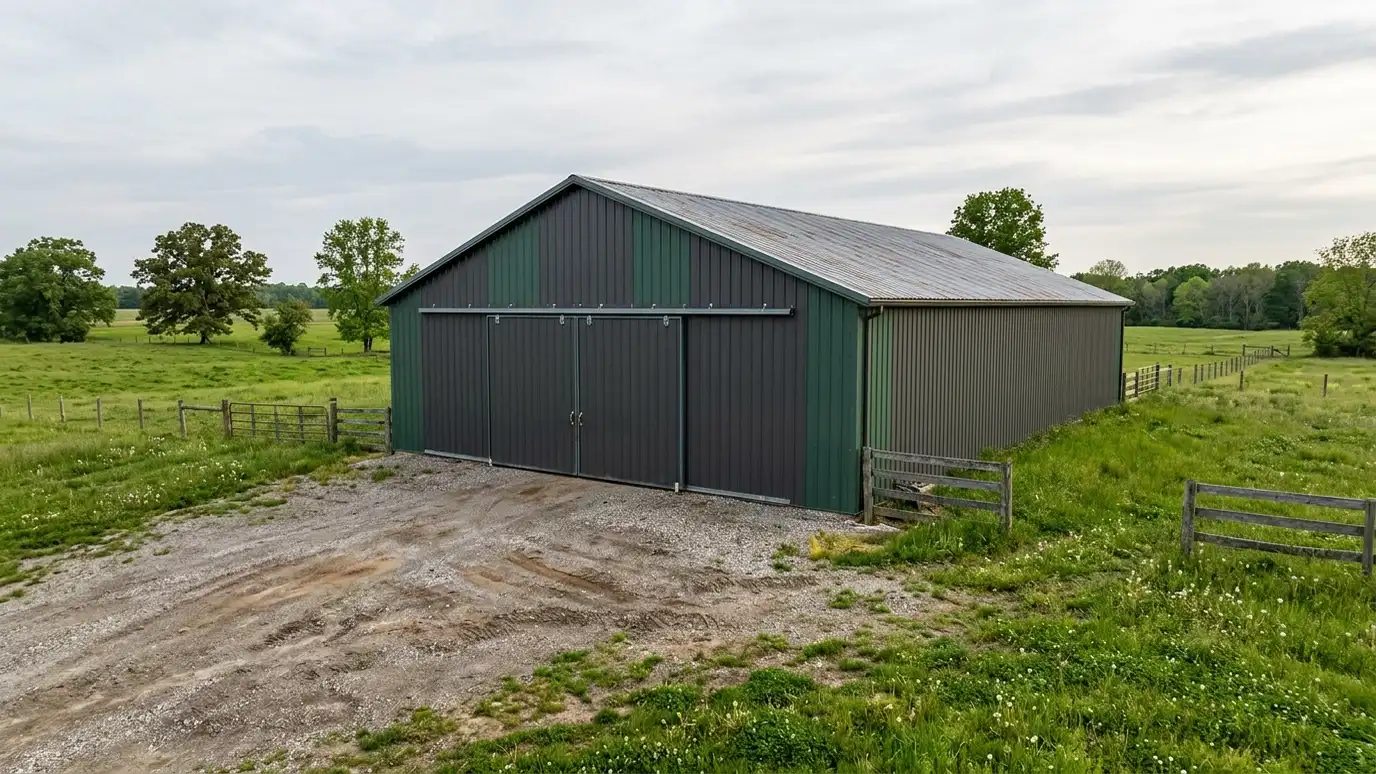 Pole BarnsPole barns built with embedded or bracketed posts, engineered trusses and metal or wood finishes, a fast, flexible…Explore
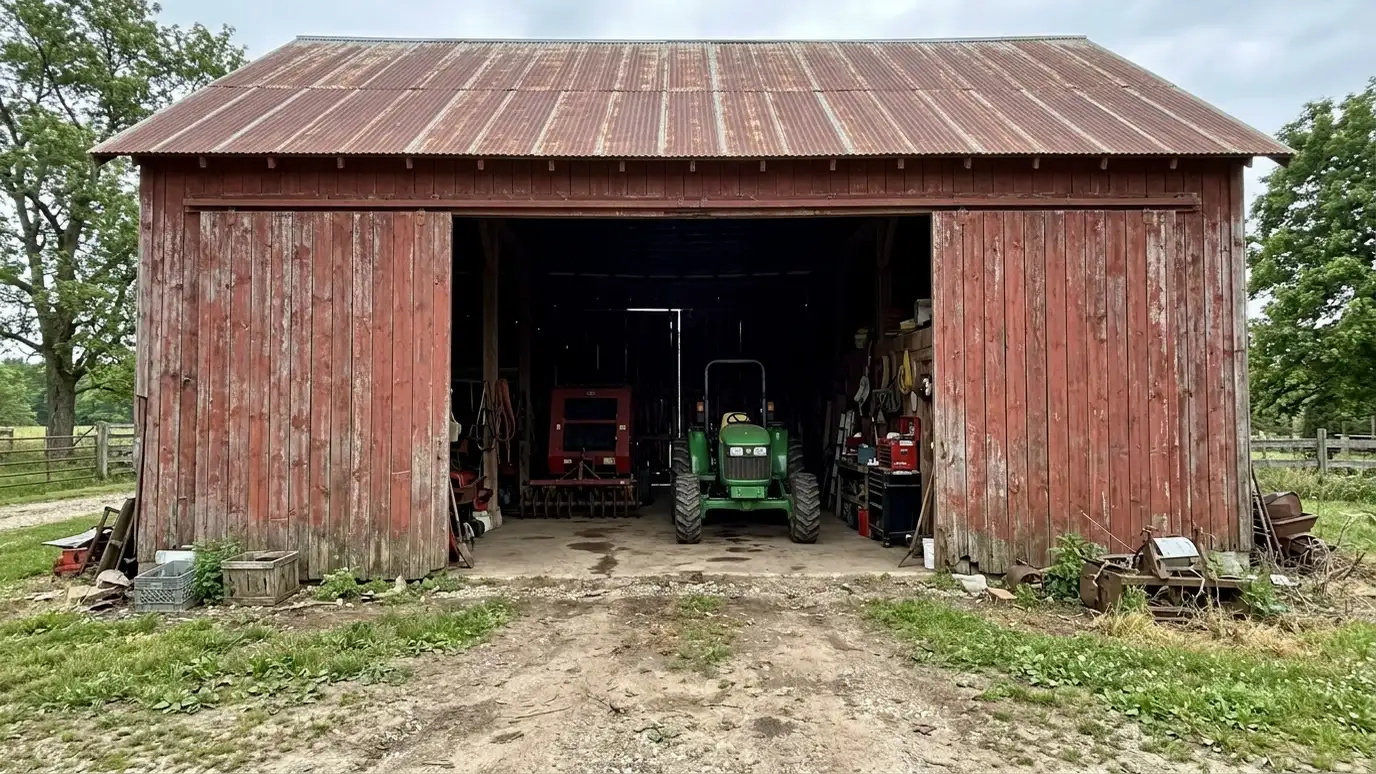 Tractor BarnsEquipment and tractor barns with tall doors, wide bays and strong floors for tractors, mowers, trailers, implements and…Explore
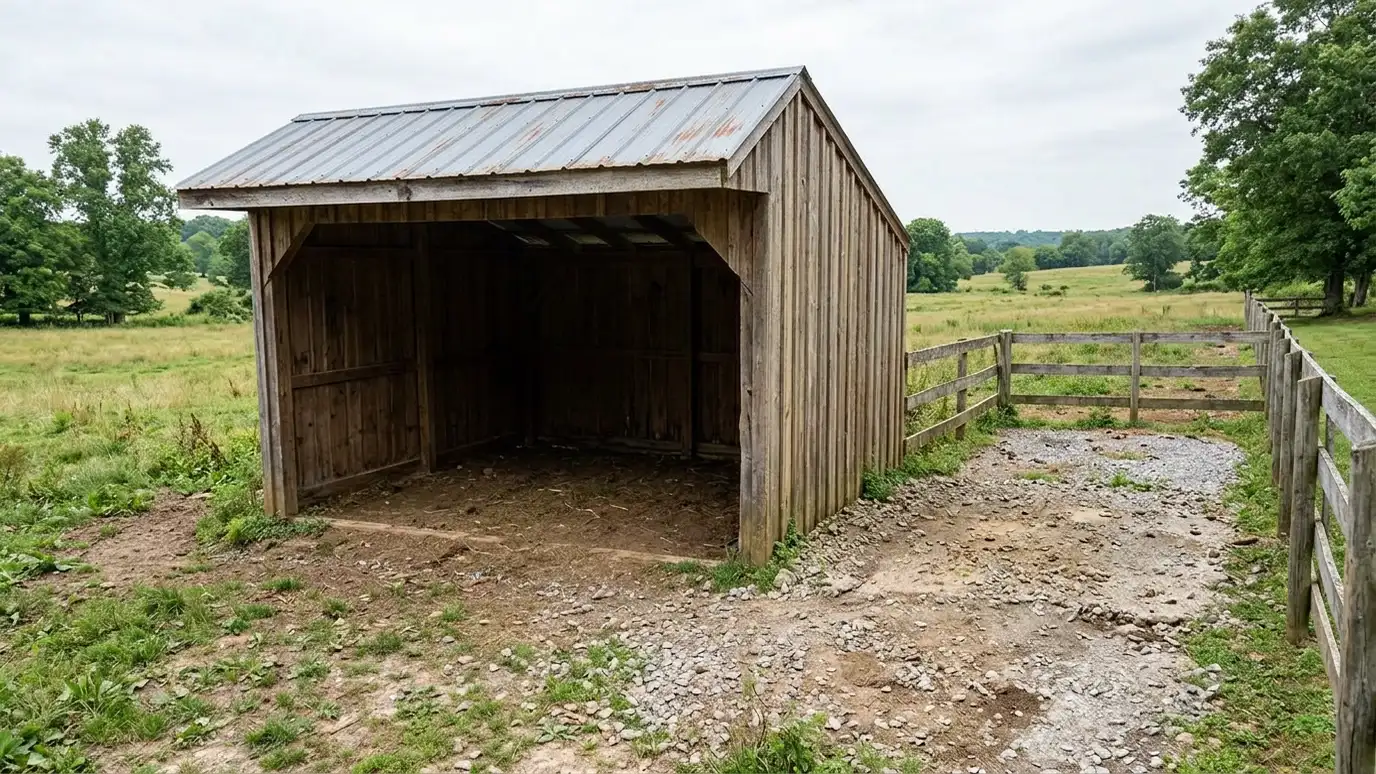 Horse BarnsHorse barns and run-in sheds with safe stalls, good airflow, wide aisles and drainage planned for animals, hay…Explore
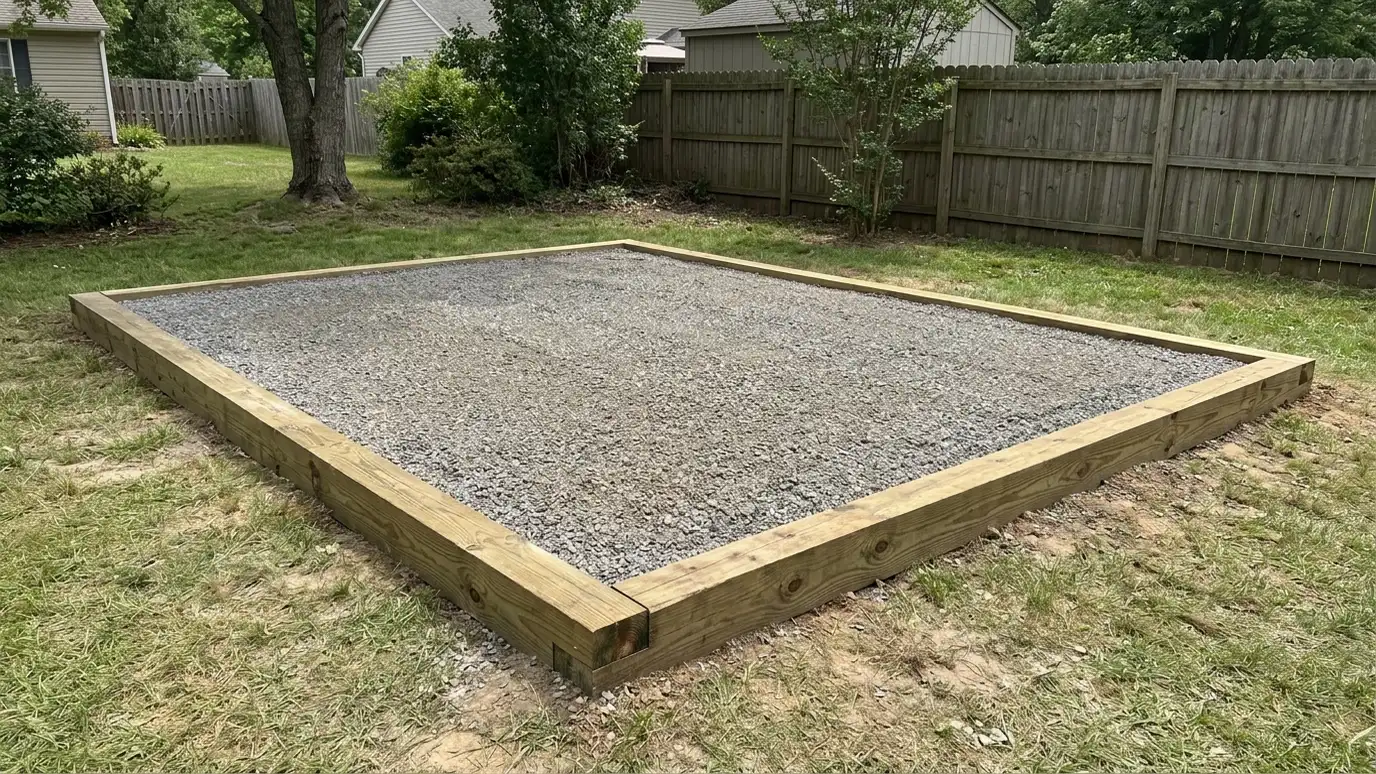 Gravel PadsGravel pad foundations made of compacted stone in a framed border, a drained, level base for sheds, small…Explore
Tell us about your lot and your idea and we will call you back to set up a visit.
Or call (615) 357-7797 to talk now.